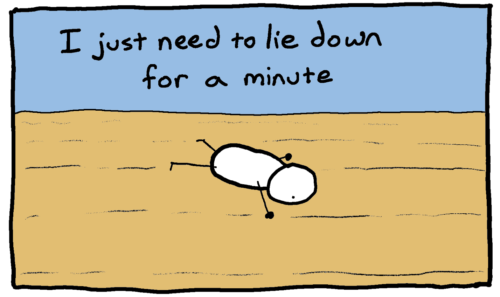
I had to give out so many referrals yesterday. About an order of magnitude above the usual number (which is nothing overboard — maybe a handful a week). It was exhausting and just … terrible. I’m not sure how else to describe it.
We recently learned that a significant portion of the students at my high school are “off track,” or missing the credits they need to graduate because they have failed or are currently failing classes, and admin freaked out about it. They sent out a slew of emails, held lots of meetings, and then sent out more emails about the meetings, which required further administrative communication (in the form of emails about emails about meetings). They didn’t say it directly, but the essential message to teachers was: We’re panicking; we need to do something.

There’s a perfectly rational explanation for this perceived dip in student performance — it’s the start of a quarter and grade books only have one or two grades in them. My classes have only had around 2 graded assignments after these first few weeks, so the students’ entire grade is currently based off of a very small sample. I mean, if a student missed one single assignment so far, they’d technically be failing.
It’s the equivalent of a baseball coach yelling at a batter after missing the first pitch of the year because his batting average was too low.

The grades will normalise after we get a better sample of students’ performance. In two weeks, I’d say, things will be closer to normal, with final quarter grades being the truly accurate measurement.
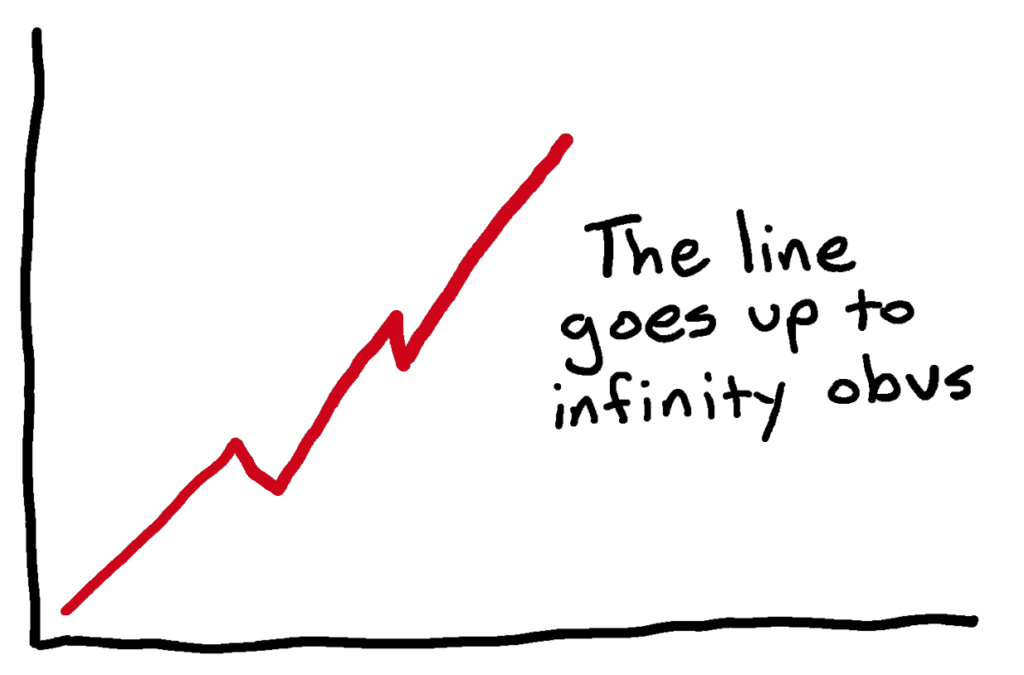
However, in the meantime, I’ve decided to try to help the problem anyway because, A) What if I’m wrong? Maybe there’s another reason why on-track data has slipped, and B) Why not try some new approaches? iI there’s a chance they help, why not give it a whirl?
I decided to focus on a group of students that are often overlooked and brushed to the side: The Barely-Theres. The ones who are at school, but only barely. Those students who do zero work, who contribute about as much as a cardboard cut-out.
In most classes at our school, there are at least one or two students who, for whatever reason, do absolutely nothing. They sit in the back of the class with their head down, don’t respond to questions, don’t turn in assignments, will ignore nearly every instruction, and are perfectly fine with failing the class. You can ask them, “Hey, is everything okay? I notice you’re not doing this assignment. Would you mind telling me why?” And they will just stare blankly at you and/or maybe shrug. Even hit them with an office referral and there will be no change. Email home? No response.
It’s heartbreaking. But in a class of 35 students I can’t spend 10 minutes trying to get little Tommy to read Abraham Lincoln’s Second Inaugural Address when all he’s barely willing to sit up (and even that only sometimes).
This week I decided to spend a little more time with those students. After all, if I can get a few of them to up their performance just a little bit, they’ll be passing, right? It’s good for them, good for admin, good for the school.

Not so “yay” for me, though. It sucks to have to “play the heavy” all day long. I had so many hallway conversations (“I want you to finish this assignment. What can we do to make that happen?”), sent so many emails to admin (“Tommy didn’t come back from lunch–have you seen him?”), wrote so many referrals (“Tommy, after repeated warnings, decided to make a TikTok dance videos in the back of the classroom while he was supposed to be writing a rough draft.”)
I was never mean about it. Just adamant. You will get this work done. I’m sorry, but putting your head down for 90 minutes is not acceptable.
I got a lot of nasty looks, got cussed at, threatened with the ol’, “My mom will hear about this!” gambit. (Which is not at all as frightening as students think it is. Oh, sweetie, I would LOVE to have a chat with your parents. Let’s call them right now!)
On top of having to be confrontational the whole day, I lost instructional time because I had to spend all those extra minutes having hallway convos; doing everything just took a lot longer and I wasn’t able to spend as much time with students who needed more academic help.
By the end of the day I was wiped. Utterly exhausted, both physically and emotionally.
You’ve got to find a balance, but I’m still not sure where that balance is for me. I’m certainly not sure if I can keep this up.