At the end of last semester — just before winter break — a troublesome student of mine handed in his final assignment and told me, “I’d better pass this class. Otherwise, I’m coming for you.”
I didn’t feel particularly threatened by it. This student talks a lot, but they’ve never been violent, so I didn’t think there was any substance to what they’d said. However, you don’t get to threaten people.
So, I took the student into the hallway and explained it to them. “You can’t talk to teachers — or anybody, I guess — like you just did. Making threats like that is very serious.” I sent the student to his admin and wrote them up.
All of this happened literally 15 minutes before school got out for winter break.
I took some time before leaving for the day to speak to administration about it; I wasn’t sure what the protocol was for threats, so I wanted to cover my bases and make sure I’d informed everyone who needed to be informed. Admin told me not to worry — that particular student was being moved out of my class. So, I thought, problem solved. Hopefully the student will be put someplace where they can find success.

Except, of course, that wasn’t the end of it. That student simply got moved from one class of mine to another class of mine. So, I’m still teaching them, but at a different time of day.
(Thanks for the help, admin! Shuffling students around like troublesome Catholic priests is sure to solve this issue.)
Yesterday, this student got in some more trouble. They were late for class without a pass, lied about where they’d been, lied about talking to an admin when told to get a tardy slip, lied about having their phone, lied about using their phone while they were supposed to be reading, and refused to stop using their phone multiple times. All of this was within the first 10 minutes of class.
I called for security to get an escort to take this student to the administration office. The student said, “I don’t need an escort. I can walk to the admin office by myself.”
I said, “I’d like to believe you, but you’ve lied pretty consistently today and you have been caught walking the halls several times this week. We’ll just wait for an escort to make sure you get where you need to be.”
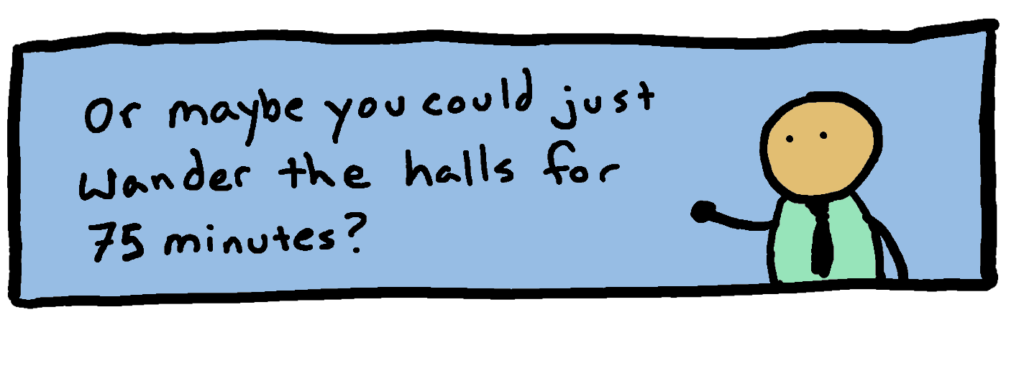
Only no escort showed up. We waited for over an hour, but … nothing. The student just sat at his desk. I carried on with the lesson and emailed admin to ask what to do in this situation but heard nothing in response before the end of class.
It is incredibly disheartening. I’m not mad at the student, just as I’m not mad at admin for keeping this student in my class, just as I’m not mad about no security escort showing up.
The cold, hard truth of it is that security was probably busy with other problems and didn’t have time to send an escort. Admin probably kept the student in my class because there was no other choice with scheduling — every student takes English and there are only so many English classes. And this student has problems of their own — I’m sure their propensity for lying is learned behavior that has helped the student in the past. They need more help; they need a classroom with fewer students and a different structure.
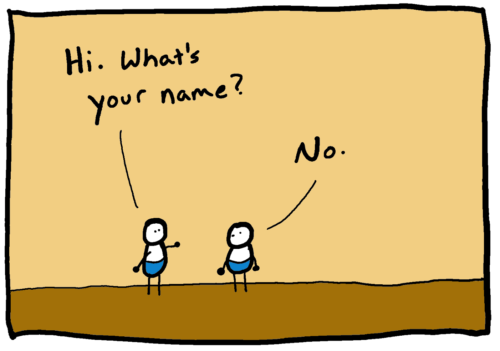
This is the kind of student who, if I asked them, “Please write your name on this piece of paper,” would fail the task. Not because they can’t write or anything; it’s more likely something along the lines of behavioral defiance. The student opposes anyone in authority “just because.”
I wish I could say I didn’t have other students with the same issue, but it’s actually pretty common.
Who would’ve thought a country like ours would produce so many people with behavioral disorders?