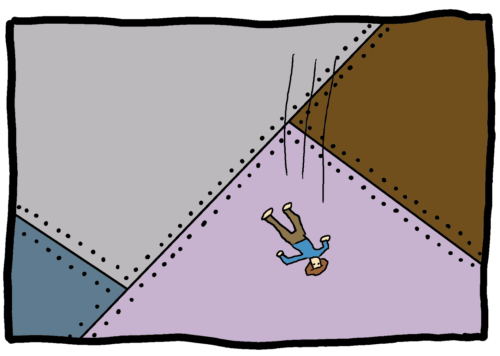
It wasn’t a funeral technically we didn’t have a funeral it was an inurnment which I learned is different than an interment

Here are some words I did say at my father’s funeral:

…everything good that I am is thanks to you. I am living and pursuing happiness in a foreign land, a thing that I have always dreamed of doing and a thing in which I find exceptional value and strength. If I wouldn’t have had you, if I wouldn’t have had Mom, none of this would have been possible. If we are to count our blessings then this is the first and perhaps greatest of mine.

Yeah, it was a little sappy.
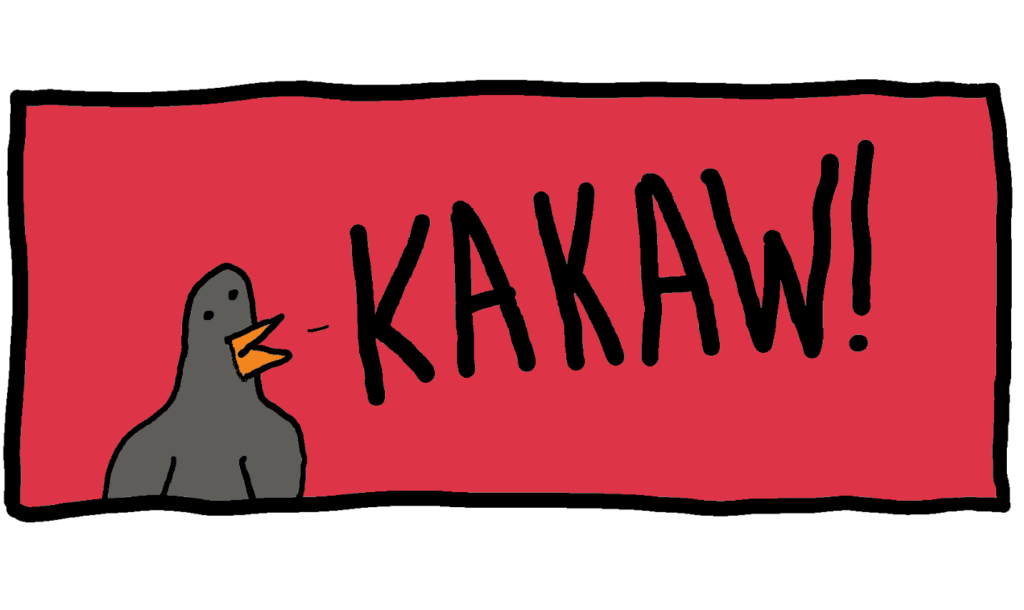
Neither of my brothers were particularly jazzed about the idea of saying something at Dad’s gravesite, so I had a little speech typed out and in my coat pocket. I won’t put all of it here on the blog, but the whole thing was about how ineffective words are at explaining loss.

The speech ended with me yelling, “Kakaw!” at all the nice folks at our small grave-side gathering. Sarah’s part was to reply by hollering, “Aye-aye-aye!” like a member of a mariachi band. (It made sense in context.)

Dad would’ve liked that.

I need that green drink fix man I’ll do anything

When I was 28 or 29 and living in South Korea, there was this little old saleswoman who would come into our private school and sell little, tiny bottles of fresh juice. She was small and polite and wore an apron as if she’d just come from the factory where they squeezed the greens. She drove around the neighborhood on a little refrigerator cart bringing juice to local businesses. (It is a job I’ve often dreamed of having…)

This little, old saleswoman said something like, “For $0.60 a day, you too can feel the health effects of mashed undergrowth!” and passed out a few free samples. Her schtick was you’d sign up with her and then, once a day, she’d come in with her electric cart and bring you a healthy little drink or two. There was pomegranate, garlic, ginger. All sorts of plants that you don’t normally associate with being “juice.”

The free sample I got tasted like grass that had been cut with the sharpened edge of kale leaf. It was bad, but not in a disgusting way. Bad like the most intense salad flavor you’ve ever tried. It was the most “green” you could possibly cram into such a tiny bottle.

I was immediately hooked. I’m not a masochist (I think) and I’ve never really loved salads, but at that point in my life I was very much in a Try-Everything-There-Is! sort of mentality. It’s just sort of something you need to do while you’re traveling — be open to ideas, try things you wouldn’t normally try, go places you wouldn’t normally go. It’s the attitude that lets you try eating dog, scorpion, or silk worm larvae. “Get uncomfortable,” basically. So, I signed up to have the lady bring me the grass/kale drink three times a week.

Since then, I’ve made a habit of drinking strange “green drink!” just about everywhere I go. I’ve been doing this for years, but over the last 1 or 2, I’ve made it a daily habit.

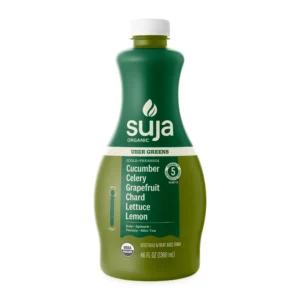
Recently, I found this at my local grocery store:

And holy shit! My first sip was so intensely green that I thought I’d poisoned myself.

Sarah and I tried it together yesterday morning, pouring a small amount into a couple of glasses and downing them in one shot like it was Everclear.

“Gah,” I groaned, temporarily unable to form words.

“Is it supposed to burn?” Sarah asked, near tears.

“I think…that’s the…ginger,” I gasped. “It’s…fresh.” Then, as I usually do, I shouted, “Green drink!” because you have to shout that when you’re recovering from the health effects of these drinks (effects like hot neck and fizzy tum).

Anywho, I didn’t really poison myself. That drink is just…intense. They need to start doing commercials for it like they did for 5 Gum, except in these commercials people will say, “This is what it’s like to drink Suja!” all while being intensely and graphically violated by greens.

It might not sell very well at first, but I believe the commercials will find the right people. The people who need to see such things. Most of them probably aren’t even aware that they need to.

Translations & Hand-Holding

The Epic of Gilgamesh isn’t what you’d call a “fun” book, unless you happen to be 4,000 years old or live in the ancient city of Nineveh. And let’s be real. The cost of living has gotten so bad that practically no one can afford that Nineveh rent.

What I tell people about Gilgamesh is that it’s (arguably) the oldest bit of literature humans have and that, on a sentence-by-sentence basis, the whole thing makes you question the very act of translation itself.

I’m normally a huge fan of parsing translated works. It’s an unusual stance, but I enjoy reading translations. They’re a linguistic playground — no translation is ever 100% accurate, so you get to ponder the smallest of details, question every turn of phrase. 

In Gilgamesh’s case, though, it isn’t just a language barrier. There’s also a time barrier that confounds the whole thing.

Example: There’s a part of the story in which Gilgamesh is going to bed in order to have some prophetic dreams while hanging out in the wilderness with his ol’ buddy Enkidu. After some dialogue, the author says…

“Then they took each other by the hand and lay down to sleep…”

As a contemporary reader, I can’t help but wonder, “Why are these two heroes holding hands?” We’re very nit-picky, we readers, and wonder about everything.

If it were a modern story (specifically one written in English), I wouldn’t need to wonder all that much about it. I understand why most modern English-speakers hold hands, and even if I didn’t I could figure it out from context. For Gilgamesh and Enkidu, though, it’s hard to tell. Did people 4000+ years ago hold hands the way we hold hands? Or was there something else to it?

As far as I see it from my desk here in the Teacher’s Plan Center, there are 8 reasons why it might happen, this ancient hand-holding. 

Reasons Why Gilgamesh and Enkidu Might Hold Hands:

  1. They’re pals. Pals hold hands, right?
  2. One of them feels nervous.
  3. They both feel nervous.
  4. They have a romantic relationship.
  5. It foreshadows a later event. 
  6. It’s a different form of nonverbal communication.
  7. It’s a ritual. (Maybe religious?)
  8. It signifies some kind of character development of which modern readers are unaware.

That’s not a comprehensive list — odds are the reason is either so simple as to be not worth mentioning or so ancient that we simply don’t know.

But that’s the fun of it. Or at least that’s how English Teachers get their fun — it’s just amazing to see something as mundane as holding hands turn into this timeless question of narrative detail.

If you want a real answer, though, you’re going to have to talk to someone smarter than I am. You silly people expect me to tell you everything?