There are a lot of things that happen in an educational setting today that didn’t happen when I was in high school. No surprise there — I’m a solidly middle-aged guy, so you’d expect that things would have changed in some way, shape, or form.
One change that has become an everyday buzzword in schools is a thing called “Bell Work.”
Practically, there’s nothing really new or groundbreaking about the idea of Bell Work; it’s just an activity or assignment that students are supposed to work on right as the bell is ringing at the start of class. The goal is to more efficiently utilize class time by having students do something immediately when they enter the room. (Because, presumably, students were doing nothing before.)
I’m guessing Bell Work became a thing because some administrator somewhere wanted to make it look like they were “improving” student and teacher performance at their school or district by shaving off those wasted minutes of class during which those same teachers and students were saying hello to each other and/or making small talk.
Anywho. There are a variety of bell work activities that I have students do throughout the year, but right now we’re doing a new kind of bell work that I’m calling “The Fight Bracket.”
Basically, I created a tournament bracket of 16 fictional characters that are going to square off in battle to discover who, ultimately, is the strongest fictional character of all. At the end of class, I give students a QR code to a Google Form that asks, “Who would win in a fight, X or Y?” and has the day’s two contestants as options. Whoever gets the most votes is crowned victorious and moves on to the next round.
The next day, I share the results and give out the next “Battle.”
ChatGPT made this. Sue me.
What does all of this have to do with English? Not a damned thing! It’s just entertaining to talk about.
No offense to the admin who thought up “Bell Work” as a way to show their boss that they were making schools better by cutting out all that “wasted class time,” but I’m going to spend a little bit of each day just doing fun stuff.
As Kurt Vonnegut said,
“I tell you, we are here on Earth to fart around, and don’t let anybody tell you different.”
At the end of last semester — just before winter break — a troublesome student of mine handed in his final assignment and told me, “I’d better pass this class. Otherwise, I’m coming for you.”
I didn’t feel particularly threatened by it. This student talks a lot, but they’ve never been violent, so I didn’t think there was any substance to what they’d said. However, you don’t get to threaten people.
So, I took the student into the hallway and explained it to them. “You can’t talk to teachers — or anybody, I guess — like you just did. Making threats like that is very serious.” I sent the student to his admin and wrote them up.
All of this happened literally 15 minutes before school got out for winter break.
I took some time before leaving for the day to speak to administration about it; I wasn’t sure what the protocol was for threats, so I wanted to cover my bases and make sure I’d informed everyone who needed to be informed. Admin told me not to worry — that particular student was being moved out of my class. So, I thought, problem solved. Hopefully the student will be put someplace where they can find success.
Except, of course, that wasn’t the end of it. That student simply got moved from one class of mine to another class of mine. So, I’m still teaching them, but at a different time of day.
(Thanks for the help, admin! Shuffling students around like troublesome Catholic priests is sure to solve this issue.)
Yesterday, this student got in some more trouble. They were late for class without a pass, lied about where they’d been, lied about talking to an admin when told to get a tardy slip, lied about having their phone, lied about using their phone while they were supposed to be reading, and refused to stop using their phone multiple times. All of this was within the first 10 minutes of class.
I called for security to get an escort to take this student to the administration office. The student said, “I don’t need an escort. I can walk to the admin office by myself.”
I said, “I’d like to believe you, but you’ve lied pretty consistently today and you have been caught walking the halls several times this week. We’ll just wait for an escort to make sure you get where you need to be.”
Only no escort showed up. We waited for over an hour, but … nothing. The student just sat at his desk. I carried on with the lesson and emailed admin to ask what to do in this situation but heard nothing in response before the end of class.
It is incrediblydisheartening. I’m not mad at the student, just as I’m not mad at admin for keeping this student in my class, just as I’m not mad about no security escort showing up.
The cold, hard truth of it is that security was probably busy with other problems and didn’t have time to send an escort. Admin probably kept the student in my class because there was no other choice with scheduling — every student takes English and there are only so many English classes. And this student has problems of their own — I’m sure their propensity for lying is learned behavior that has helped the student in the past. They need more help; they need a classroom with fewer students and a different structure.
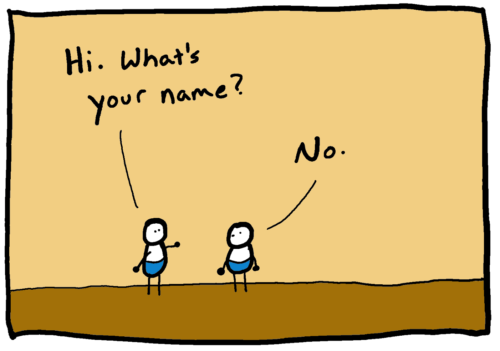
This is the kind of student who, if I asked them, “Please write your name on this piece of paper,” would fail the task. Not because they can’t write or anything; it’s more likely something along the lines of behavioral defiance. The student opposes anyone in authority “just because.”
I wish I could say I didn’t have other students with the same issue, but it’s actually pretty common.
Who would’ve thought a country like ours would produce so many people with behavioral disorders?
I swear I’m getting dumber and dumber as the days go on. It’s like my brain is turning into a dried up husk.
It’s not that I’m forgetting how to speak or do math(although I feel like I’m a lot slower at both of those things than I was, oh, five years ago) but that I’m feeling a lot more scatter-brained. I am all over the place.
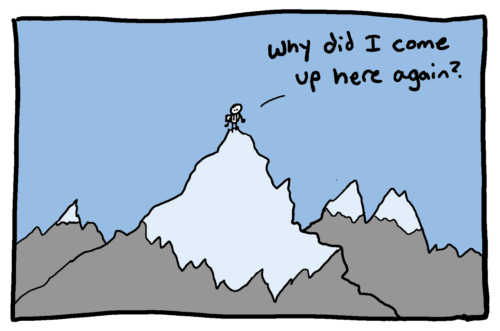
You know that feeling you get when you walk into a room and forget why you’re there? That’s called an event boundary, and it basically happens because your mind starts a new “instance” of itself when you are in a new context. When you’re in the kitchen, kitchen-you can be perfectly aware that kitchen-you needs kitchen-your airpods, but when kitchen-you goes into the bedroom to get them, a whole new you pops up!It’s Bedroom-you, who doesn’t run the same set of processes. Bedroom-you isn’t thinking about how kitchen-you’d like to listen to a podcast while kitchen-you’re cooking; bedroom-you wonders if bedroom-your sweatpants are in the dryer or in the hamper.
Hence, it feels like you “forgot” why you went into the bedroom just because your mind switched modes. Go back to the kitchen and, odds are, you’ll remember what you were after.
It’s like a crappy magic trick! You’re the one with the saw and you’re the one getting cut in half!
I left my kindle at work so I can’t draw pictures
See? I can remember that stuff perfectly well, but I’ll still fall victim to this psychological treachery.
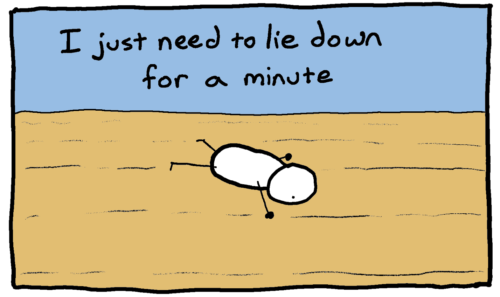
The worst part of it is the way my attention span has been impacted. It’s not that I’ll be sitting and reading a book and then go, “I’m bored. I should do something else.” But I will sit down to read and find myself suddenly standing up to go do something else when I don’t even realize I’m doing it. Only when I’m elbow deep in dirty dishes will I go, “Oh, yeah, I was reading.”
This is just evidence
Anywho. I’m guessing that the problem is related to my sleep, which makes sense, since I just got done blogging about how bad my sleep patterns are.
It’s tough to decide what to do about this. Except, of course, have a cup of tea.
Of my inevitable mental decline
In other news, after a second round of grades put in the gradebook, hey, look at that, the average grades in most classes are normalizing. There aren’t nearly as many failing grades as the administration was worried about. Why? Because a student’s overall performance is no longer tied to one or two data entries.
It’s almost as if freaking out about off-track data during the first few weeks of school was a total waste of time.
I had to give out so many referrals yesterday. About an order of magnitude above the usual number (which is nothing overboard — maybe a handful a week). It was exhausting and just … terrible. I’m not sure how else to describe it.
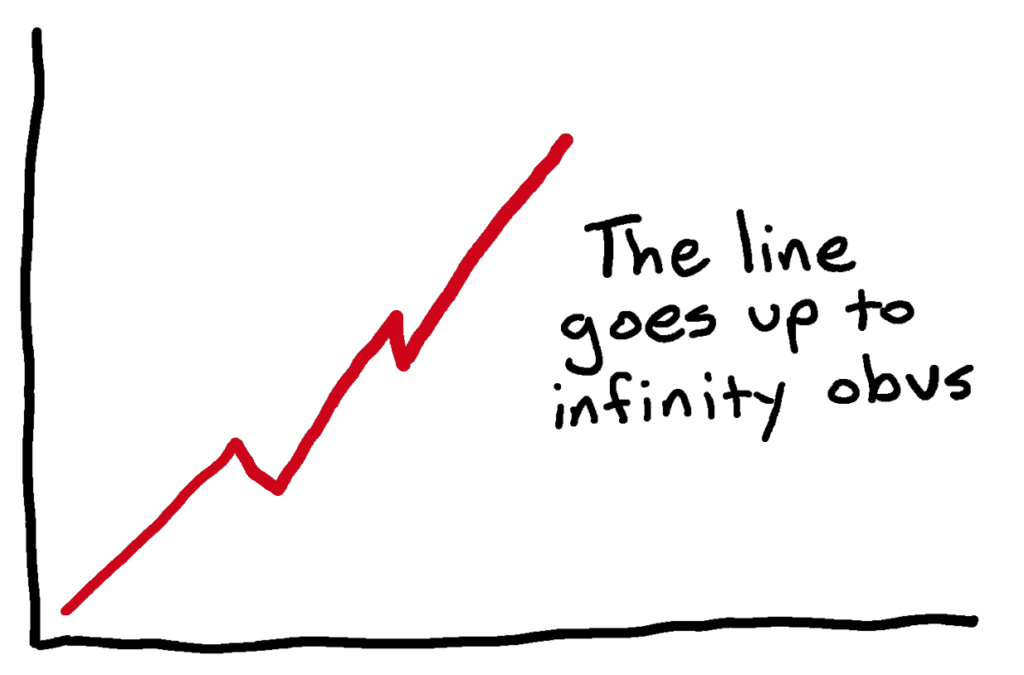
We recently learned that a significant portion of the students at my high school are “off track,” or missing the credits they need to graduate because they have failed or are currently failing classes, and admin freaked out about it. They sent out a slew of emails, held lots of meetings, and then sent out more emails about the meetings, which required further administrative communication (in the form of emails about emails about meetings). They didn’t say it directly, but the essential message to teachers was: We’re panicking; we need to do something.
There’s a perfectly rational explanation for this perceived dip in student performance — it’s the start of a quarter and grade books only have one or two grades in them. My classes have only had around 2 graded assignments after these first few weeks, so the students’ entire grade is currently based off of a very small sample. I mean, if a student missed one single assignment so far, they’d technically be failing.
It’s the equivalent of a baseball coach yelling at a batter after missing the first pitch of the year because his batting average was too low.
The grades will normalise after we get a better sample of students’ performance. In two weeks, I’d say, things will be closer to normal, with final quarter grades being the truly accurate measurement.
However, in the meantime, I’ve decided to try to help the problem anyway because, A) What if I’m wrong?Maybe there’s another reason why on-track data has slipped, and B) Why not try some new approaches? iI there’s a chance they help, why not give it a whirl?
I decided to focus on a group of students that are often overlooked and brushed to the side: The Barely-Theres. The ones who are at school, but only barely. Those students who do zero work, who contribute about as much as a cardboard cut-out.
In most classes at our school, there are at least one or two students who, for whatever reason, do absolutely nothing. They sit in the back of the class with their head down, don’t respond to questions, don’t turn in assignments, will ignore nearly every instruction, and are perfectly fine with failing the class. You can ask them, “Hey, is everything okay? I notice you’re not doing this assignment. Would you mind telling me why?” And they will just stare blankly at you and/or maybe shrug. Even hit them with an office referral and there will be no change. Email home? No response.
It’s heartbreaking. But in a class of 35 students I can’t spend 10 minutes trying to get little Tommy to read Abraham Lincoln’s Second Inaugural Address when all he’s barely willing to sit up (and even that only sometimes).
This week I decided to spend a little more time with those students. After all, if I can get a few of them to up their performance just a little bit, they’ll be passing, right? It’s good for them, good for admin, good for the school.
Not so “yay” for me, though. It sucks to have to “play the heavy” all day long. I had so many hallway conversations (“I want you to finish this assignment. What can we do to make that happen?”), sent so many emails to admin (“Tommy didn’t come back from lunch–have you seen him?”), wrote so many referrals (“Tommy, after repeated warnings, decided to make a TikTok dance videos in the back of the classroom while he was supposed to be writing a rough draft.”)
I was never mean about it. Just adamant. You will get this work done. I’m sorry, but putting your head down for 90 minutes is not acceptable.
I got a lot of nasty looks, got cussed at, threatened with the ol’, “My mom will hear about this!” gambit. (Which is not at all as frightening as students think it is. Oh, sweetie, I would LOVE to have a chat with your parents. Let’s call them right now!)
On top of having to be confrontational the whole day, I lost instructional time because I had to spend all those extra minutes having hallway convos; doing everything just took a lot longer and I wasn’t able to spend as much time with students who needed more academic help.
By the end of the day I was wiped. Utterly exhausted, both physically and emotionally.
You’ve got to find a balance, but I’m still not sure where that balance is for me. I’m certainly not sure if I can keep this up.