Three dollars times five days a week times four weeks a month is sixty dollars times twelve months a year is seven hundred and twenty which it turns out is too much

I’ve been thinking a lot recently about what it means to be “Put Together.(As in, “Let me put myself together,” or, “That’s a guy who really has it all together.“) It’s a feeling that I like and I assume everyone else likes it, too. Otherwise, why would we all have dress shoes?

Anywho. When I think of being “Put Together,” I always think of Haruki Murakami.

Author of books like 1Q84, The Wind-Up Bird Chronicle, and Kafka on the Shore, Haruki Murakami has become a bit of a literary staple. I had a furious love affair with Haruki Murakami’s books in the 2010s, when I was in Korea and shopping at What the Book, which carried all his Vintage International Editions with covers by John Gall. (I read them all, collected all the different editions. I even had a few written in Japanese, which I couldn’t read but admired.)

I’m a Murakami nut.

Murakami has a few tropes that appear in his works, and one of them is the (usually male) character who loses his current life for one reason or another and is forced to rebuild his life from the ground up in a whole new setting.

Like, a guy has an existential crisis, gets dumped by his wife, leaves his house and job, and then moves out to the countryside where he works at a small-town library. Once placed in his new surroundings, Murakami describes how the character wakes up, how he cooks breakfast, how he gets to work, etc., etc. Murakami might describe the steps involved his getting dressed, how he unwinds after a long day, the restaurant he goes to for dinner, or the turn-by-turn route he takes in going home from work in the evening. All of it is so meticulous and minute and it just scratches some kind of itch that I have. I can’t get enough of it.

I think that itch I feel is the desire to be “Put Together.”

A few years ago, when I first started teaching at my current school, I was trying to set up a routine that would work for me. Sarah and I had just moved into the house we rent and things were … tough. We’d been overseas for so long, we didn’t have any furniture, knew hardly anybody in town, the pandemic had just happened, and both of us weren’t making very much money.

Things were decidedly not Put Together.

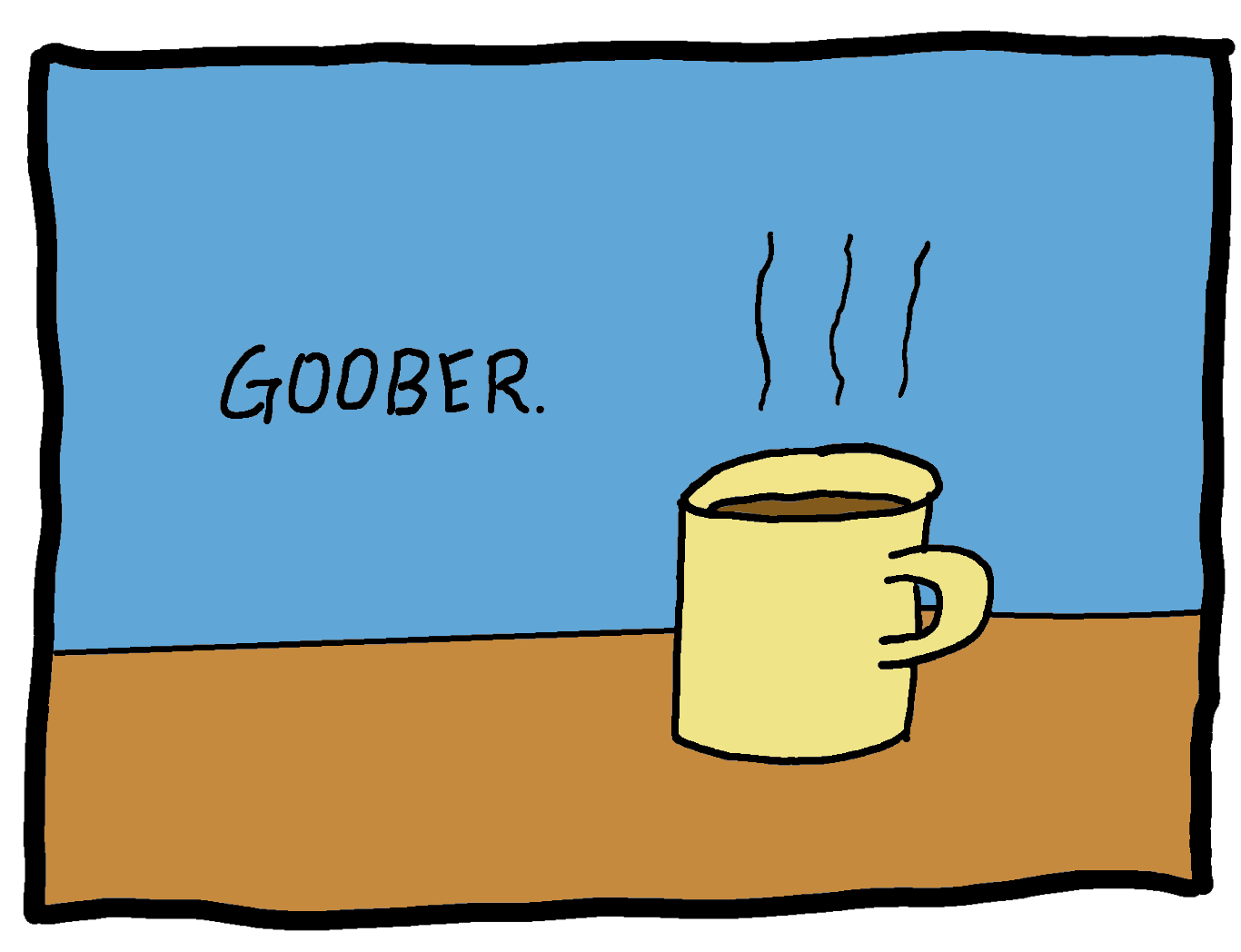
Back then, I thought I’d stop in the mornings at a gas station for a quick cup of coffee like I did back when I was student teaching, which was the last time I’d been a teacher in a U.S. classroom. It was a silly thing, but I liked stopping at a little place before the sun came up for a quick cuppa. I liked the silly little interactions I had with the gas station attendant. I liked walking into the school building with a warm paper cup in one hand and my entry badge in the other. I liked to take a little sip, smack my lips real loud, and go, “Aaahhh!” so it echoed down the hallways. Frivolous? Sure, but you’ve got to take pleasure in tiny, pointless, everyday activities. Otherwise what’s the point?

After a few days, though, I did the math, and I realized that I wasn’t making enough money to buy gas station coffee before work. With rent, utilities, gasoline, insurance, groceries … I just couldn’t afford to stop at a f*cking Casey’s for a bullshit cup of coffee every morning. And while having a gas station coffee isn’t necessarily a big part of being “Put Together,” it felt like I was trying to build for myself one of those minuscule Murakami habits only to be told, “Sorry, the coffee from our gas station is for better people than you.”

I’m still bitter about it. Dark and bitter. And aromatic!

I’m just saying that even if I donated the money don’t put my name on it bad stuff happens in there so just call it something else please

The city of Lincoln waits for you like a big red splotch, as if a great glob of glued-together Republicans fell from the sky and splattered over dozens of square miles of pasture at the heart of the Great Plains. They spread out, repopulated, all started building. First, ranch-style homes. Next, steak houses.

The fact that the University of Nebraska (arguably the most liberal spot in the state) is in Lincoln is only redeemed in the eyes of the citizenry by the Cornhuskers, the perennial disappointment of a football team with an inexplicably avid fan base.

In the far south of Lincoln is where you’ll find the April Sampson Cancer Center, which I can only describe as a cathedral to the gods of malignant tumors. It is massive and modern and all made of glass and marble. The foyer is tall. It looks like it was pulled out of a mega church, or maybe a bank, because right off to the side there are a bunch of partitioned desks where the administrative sides of things are handled. (That’s where they tell you your insurance doesn’t cover it. That’s where they tell you you’re bankrupt.)

There are a fleet of wheelchairs just inside the entrance and whole building is dedicated to cancer and, boy, do I hate it. I mean, I’m glad it’s here and I appreciate all the doctors and nurses and support staff. Everyone is so nice. They bake cookies every day and go around passing them out. There are player pianos and a cafe where the worker is quick to tell you about the free refills. There’s a whole path out back where you can walk around when the weather is nice. It has a water feature. It’s as pleasant of a “cancer building” as one could ask for. But I hate the fact that this building even exists.

I’m not a conspiracy theory sort of person, but there are a couple of things that I think are true:

  1. American car companies and the oil industry conspire and bribe the government to disincentivize small, cheap electric vehicles.
  2. There are people in the medical and insurance industries who would happily inject every American with poison if it meant they could squeeze another dollar out of one needy schmuck.  

I get the feeling that whoever built the April Sampson Cancer Center, whoever is profiting from it, considers the whole outside world to be one big waiting room and all of us peons are just cancer patients in the making. Waiting in the wings for our chance in the radioactive spotlight.

It’s pessimistic. Probably not the thing to focus on. Today, however, I am filled with dark images that occupy my mind like belligerent apartment tenants who refuse to vacate.

(When the pain got really bad, Dad’s hand seemed to rise up of its own accord. It hovered a few inches in the air. I recognized the motion. His fingers felt and fumbled with the hem of his shirt and then with the thin layer of tissue paper that covered the exam table. It was a restrained, delicate touch, but his hand didn’t find whatever it was looking for. Maybe a pocket, maybe a person, but nothing. Then his hand paused for a moment against his stomach and fell back down to the exam table, suddenly and quietly deflated.)