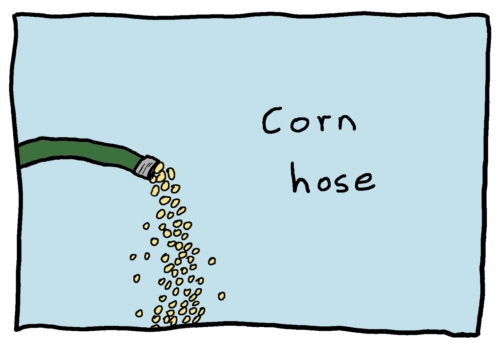
Every hose has its corn

A Court of Thorns and Roses is almost finished. I suspect that the “Rose” is the main character, Feyre, and the “Thorns” are the boundaries she’s had to put up that prevent her from forming long-term relationships until being whisked away to a magical world allows her find the courage to open up and experience true love, which, so far, seems to consist of people doing tonsil inspections and ripping off each other’s underwear.

Perhaps I’m wrong, though.

(There is a literal court and there are some literal thorns and literal roses in the book, so maybe the title is referring to them instead of being metaphorical.)

I’m also soooooo close to finishing Twelve Months that I stayed in bed this morning just a little longer so I could listen to more of it. The plot lacks the urgency of previous books in The Dresden Files. Whereas the Hero, Harry, used to pretty consistently work against a ticking clock, a lot of chapters in this book start with transitions like, “Three weeks later I was at the gym again when X happened,” or, “My next date with the succubus wasn’t until February…”

It gives the book not quite a cozy vibe, but something like it. Plus, I think it is doing a fantastic job of representing trauma. It’s not easy to capture a such a laborious recovery process in a book that still holds your attention, but it all goes with the slower-paced plot.
It’s February now and I am tired of this weather. It’s not even bad where we are — the southeastern U.S. is apparently getting hit by some hefty winter storms while we’re just sort of vaguely chilly.

Sarah and I went to Costco today and discovered that the world needs another plague. Either that or a better system than crowding people into aisles to wrestle with big boxes and huge shopping carts and telling them, “Have at it!”

There are only a handful of times that we are able to get to Costco during off-peak hours, but it makes a huge difference. If you go, say, early Tuesday morning, it’s easier to get around and you can get out of there a lot faster.

It’s one of the up-sides of summer vacation when you’re a teacher — the ability to go to stores whenever you want. (The down-side, in case you were wondering, is the slow, inescapable descent into madness.)
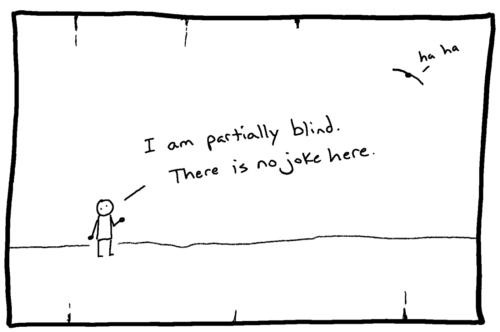
Jolene, our cat, just got spooked by the sound of my PC turning on, tried to run, bumped into my cup of tea, and then fell off the desk. Poor blind kitty!

Translations & Hand-Holding

The Epic of Gilgamesh isn’t what you’d call a “fun” book, unless you happen to be 4,000 years old or live in the ancient city of Nineveh. And let’s be real. The cost of living has gotten so bad that practically no one can afford that Nineveh rent.

What I tell people about Gilgamesh is that it’s (arguably) the oldest bit of literature humans have and that, on a sentence-by-sentence basis, the whole thing makes you question the very act of translation itself.

I’m normally a huge fan of parsing translated works. It’s an unusual stance, but I enjoy reading translations. They’re a linguistic playground — no translation is ever 100% accurate, so you get to ponder the smallest of details, question every turn of phrase. 

In Gilgamesh’s case, though, it isn’t just a language barrier. There’s also a time barrier that confounds the whole thing.

Example: There’s a part of the story in which Gilgamesh is going to bed in order to have some prophetic dreams while hanging out in the wilderness with his ol’ buddy Enkidu. After some dialogue, the author says…

“Then they took each other by the hand and lay down to sleep…”

As a contemporary reader, I can’t help but wonder, “Why are these two heroes holding hands?” We’re very nit-picky, we readers, and wonder about everything.

If it were a modern story (specifically one written in English), I wouldn’t need to wonder all that much about it. I understand why most modern English-speakers hold hands, and even if I didn’t I could figure it out from context. For Gilgamesh and Enkidu, though, it’s hard to tell. Did people 4000+ years ago hold hands the way we hold hands? Or was there something else to it?

As far as I see it from my desk here in the Teacher’s Plan Center, there are 8 reasons why it might happen, this ancient hand-holding. 

Reasons Why Gilgamesh and Enkidu Might Hold Hands:

  1. They’re pals. Pals hold hands, right?
  2. One of them feels nervous.
  3. They both feel nervous.
  4. They have a romantic relationship.
  5. It foreshadows a later event. 
  6. It’s a different form of nonverbal communication.
  7. It’s a ritual. (Maybe religious?)
  8. It signifies some kind of character development of which modern readers are unaware.

That’s not a comprehensive list — odds are the reason is either so simple as to be not worth mentioning or so ancient that we simply don’t know.

But that’s the fun of it. Or at least that’s how English Teachers get their fun — it’s just amazing to see something as mundane as holding hands turn into this timeless question of narrative detail.

If you want a real answer, though, you’re going to have to talk to someone smarter than I am. You silly people expect me to tell you everything?