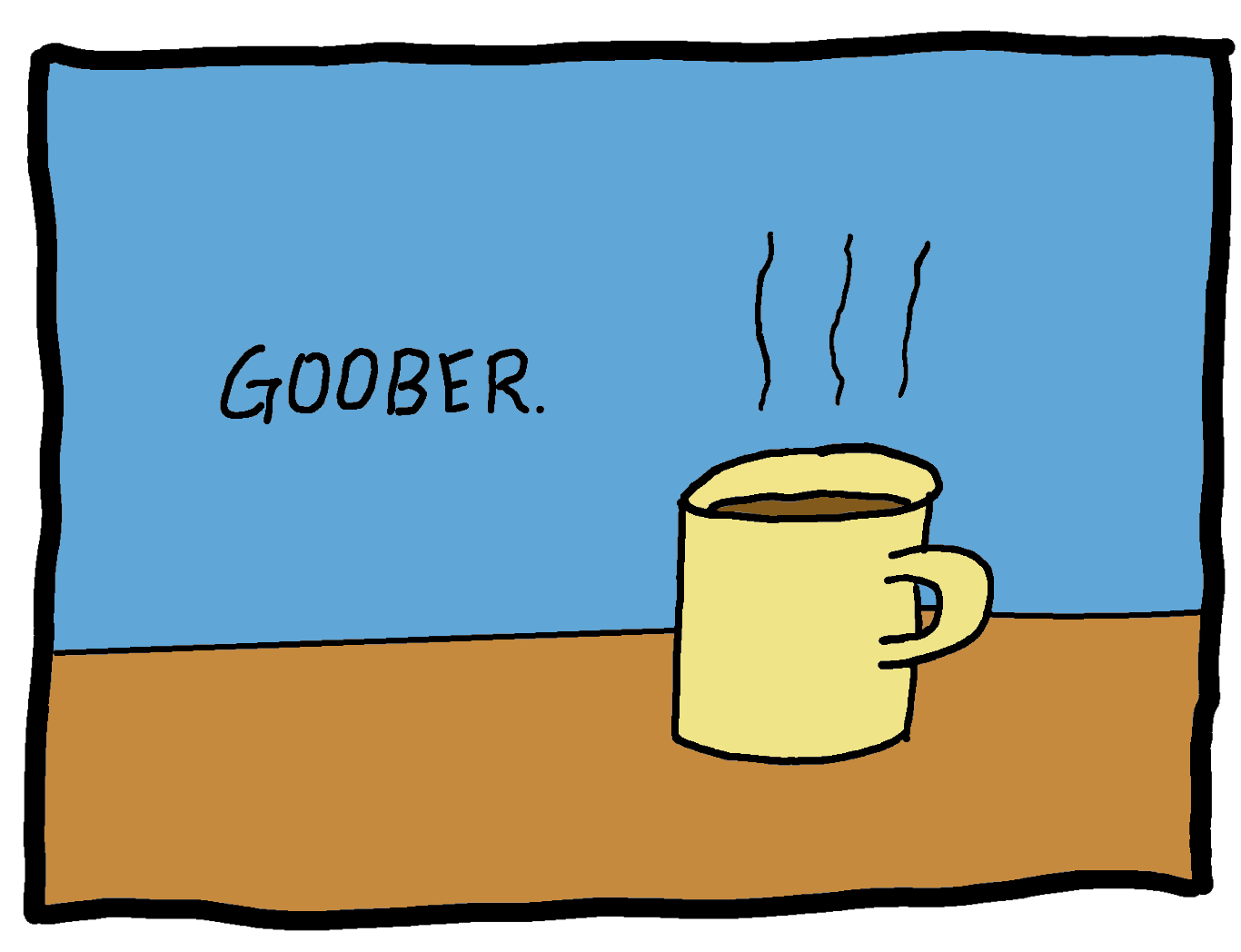
Three dollars times five days a week times four weeks a month is sixty dollars times twelve months a year is seven hundred and twenty which it turns out is too much

I’ve been thinking a lot recently about what it means to be “Put Together.(As in, “Let me put myself together,” or, “That’s a guy who really has it all together.“) It’s a feeling that I like and I assume everyone else likes it, too. Otherwise, why would we all have dress shoes?

Anywho. When I think of being “Put Together,” I always think of Haruki Murakami.

Author of books like 1Q84, The Wind-Up Bird Chronicle, and Kafka on the Shore, Haruki Murakami has become a bit of a literary staple. I had a furious love affair with Haruki Murakami’s books in the 2010s, when I was in Korea and shopping at What the Book, which carried all his Vintage International Editions with covers by John Gall. (I read them all, collected all the different editions. I even had a few written in Japanese, which I couldn’t read but admired.)

I’m a Murakami nut.

Murakami has a few tropes that appear in his works, and one of them is the (usually male) character who loses his current life for one reason or another and is forced to rebuild his life from the ground up in a whole new setting.

Like, a guy has an existential crisis, gets dumped by his wife, leaves his house and job, and then moves out to the countryside where he works at a small-town library. Once placed in his new surroundings, Murakami describes how the character wakes up, how he cooks breakfast, how he gets to work, etc., etc. Murakami might describe the steps involved his getting dressed, how he unwinds after a long day, the restaurant he goes to for dinner, or the turn-by-turn route he takes in going home from work in the evening. All of it is so meticulous and minute and it just scratches some kind of itch that I have. I can’t get enough of it.

I think that itch I feel is the desire to be “Put Together.”

A few years ago, when I first started teaching at my current school, I was trying to set up a routine that would work for me. Sarah and I had just moved into the house we rent and things were … tough. We’d been overseas for so long, we didn’t have any furniture, knew hardly anybody in town, the pandemic had just happened, and both of us weren’t making very much money.

Things were decidedly not Put Together.

Back then, I thought I’d stop in the mornings at a gas station for a quick cup of coffee like I did back when I was student teaching, which was the last time I’d been a teacher in a U.S. classroom. It was a silly thing, but I liked stopping at a little place before the sun came up for a quick cuppa. I liked the silly little interactions I had with the gas station attendant. I liked walking into the school building with a warm paper cup in one hand and my entry badge in the other. I liked to take a little sip, smack my lips real loud, and go, “Aaahhh!” so it echoed down the hallways. Frivolous? Sure, but you’ve got to take pleasure in tiny, pointless, everyday activities. Otherwise what’s the point?

After a few days, though, I did the math, and I realized that I wasn’t making enough money to buy gas station coffee before work. With rent, utilities, gasoline, insurance, groceries … I just couldn’t afford to stop at a f*cking Casey’s for a bullshit cup of coffee every morning. And while having a gas station coffee isn’t necessarily a big part of being “Put Together,” it felt like I was trying to build for myself one of those minuscule Murakami habits only to be told, “Sorry, the coffee from our gas station is for better people than you.”

I’m still bitter about it. Dark and bitter. And aromatic!

A vice so nice I did it twice

Over the last few years, I’ve gone to great lengths to rid myself of vices. I’ve given up smoking, alcohol, soda, and coffee. I’ve started trying to eat healthier, to drink more water, and to exercise more.

If I’m being honest, it’s been horrible. More than horrible. Boring.

When I lived and taught in Korea (between 2008 and 2019), drinking and smoking were practically required. It’s a pretty big cultural difference — I went out with coworkers much more frequently than you do in the U.S. People drank, smoked, and generally had a rip-roaring good time about once a week. It made you feel cool.

(In Korea I’ve been stumbling around drunk at 2 AM on a weeknight with the principal of the elementary school I worked at. There wasn’t anything strange about it. Everyone thought it was normal. Good even. In contrast, at my current school, we go out to dinner or something about once or twice each year.)

I feel decidedly uncool. In fact, I’m as square as a set of dice.

I’m pretty sure what I’m describing is called “growing up,” but it hasn’t been easy.

I’ve been trying to get myself to take pleasure in small things — the little daily rituals you do without thinking about it. Basically, I’ve been trying to think of myself as a character in a Haruki Murakami novel.

In case you’ve never read any of Murakami’s work, there are very frequently characters who embrace simplicity and routine as if it were their entire identity.

Tengo washed the rice, put it in the cooker, and turned on the switch. He used the time until the rice was ready to make miso soup with wakame seaweed and green onions, grill a sun-dried mackerel, take some tofu out of the refrigerator and flavor it with ginger, grate a chunk of daikon radish, and reheat some leftover boiled vegetables. To go with the rice, he set out some pickled turnip slices and a few pickled plums.

Besides being fantastic about food writing, you can see in this excerpt from 1Q84 that Murakami’s characters have a certain kind of presence (as in present in the moment) that I wish wish wish I possessed. I want to be the sort of person who can not only put together a healthy meal, but also enjoy the process.

I’m not there yet, but I’ve been trying for so long that I’ve started to wonder if it’s even possible.